If Your Roof
Leaks at Screw Rows After Heavy Rain
Washers have dried and cracked, or panel movement has backed screws out of the purlin.
Start WithFastener Replacement

As a Radcliff commercial metal roof repair contractor, we repair exposed-fastener and standing seam roofs at screws, laps, rust spots, gutters, ridge caps, and curbs.
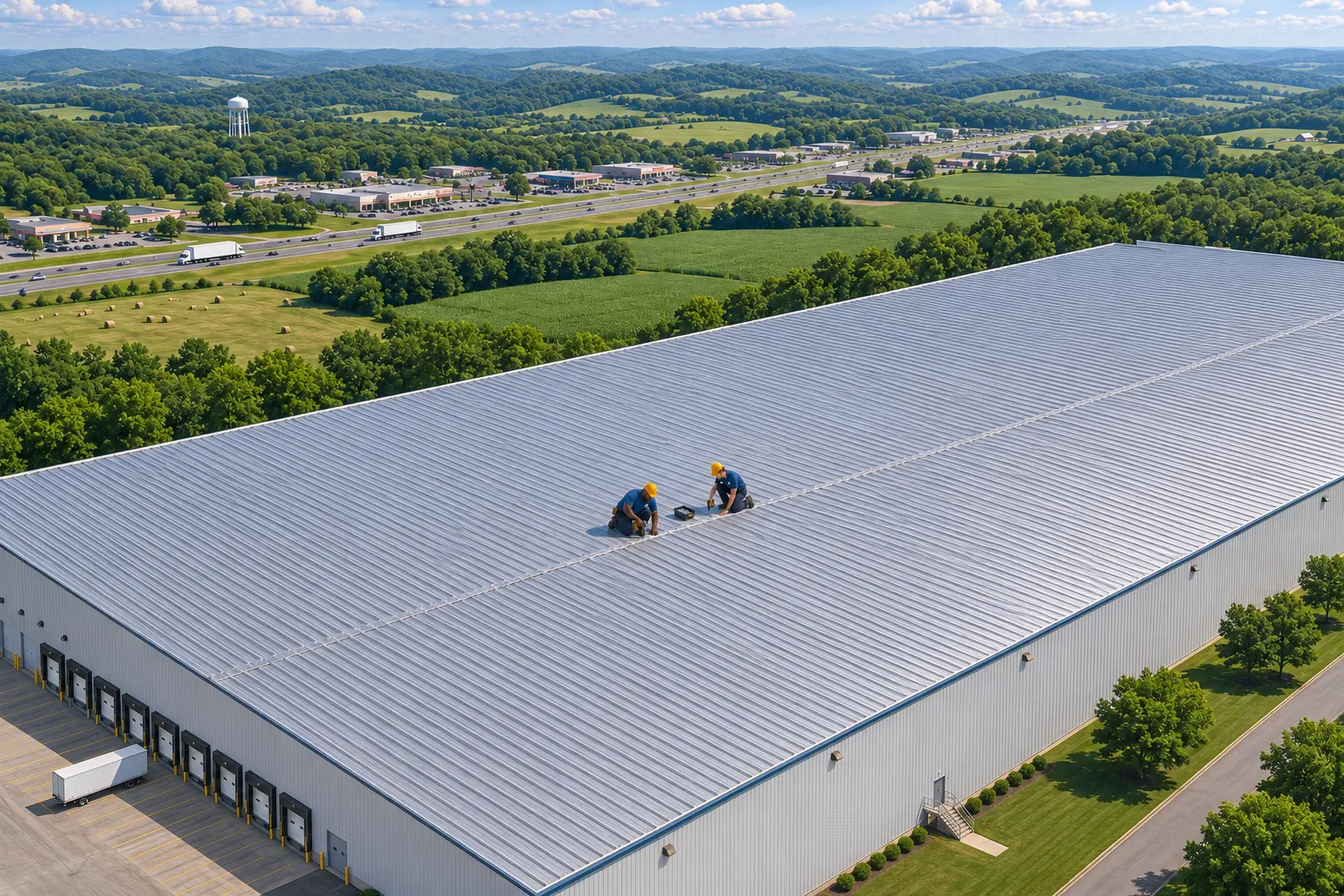
A Radcliff commercial metal roof repair contractor sorts the roof into one of these four situations first, based on how firm the steel still is.
Washers have dried and cracked, or panel movement has backed screws out of the purlin.
Water is running uphill under an end lap and seeping in at the purlin.
Rust has come through in one patch while the surrounding steel stays firm.
Steel flakes away under a scraper and rust-through follows the panel lines.
These metal roof conditions are behind most repair calls on warehouses, shops, and farm buildings.
Panel movement slowly backs fasteners out of the purlin, and each loose screw opens a hole around its washer.
Rain runs uphill under an end lap by capillary action, so laps near the eave carry the most water.
Rust tends to run deeper at the bottom end of a panel and inside laps than it looks from above.
Box gutters built into the roof edge leak into the wall when their seams fail, a priority on older buildings.
Cracked panels leak and are also a fall hazard, so they get marked before anyone works nearby.
Wind lifts trim away from the panels and pushes rain past worn foam closures under the ridge.
The repair follows the condition of the steel and the detail that is leaking.
| Condition | Repair | Done Right When |
|---|---|---|
| Surface rust, steel firm | Clean, prime, and seal | Primer covers bare steel before any sealant |
| Pinholes in a small area | Fabric-reinforced patch in compatible sealant | Fabric runs well past the pinholes |
| Holes larger than a hand | Metal patch screwed and sealed over the opening | Patch laps shed water downslope |
| Rust-through along a panel run | Panel replacement with new laps and fasteners | New panel matches the rib profile |
| Leaking end or side laps | New butyl tape or sealant plus stitch screws | Stitch spacing follows the panel maker |
Metal repairs aimed at fasteners, laps, and rust spots keep the panels in service and the building running underneath.
Water drips at every loose screw and stains the insulation facing.
Oversized screws with new washers close the old holes, and abandoned holes get a stitch screw and sealant.
Seepage shows along the purlin under the lap, worst near the eave.
Fresh butyl tape and stitch screws pull the lap tight, which stops water from wicking uphill into the building.
A handful of pinholes lets daylight and rain through one panel.
Patching only that section keeps the firm panels around it in place and avoids replacing a whole run of roof.
Rain collects on the high side of a rooftop unit and gets under the flashing.
Resealing the curb, or rebuilding it with a diverter on the high side, sends that water around the unit.
Call us and say which panel run or lap is dripping. Keep people out from under cracked skylight panels.
Call UsSend the building type and roof profile so the inspection covers the right screw rows and laps.
Get A Free EstimateMetal roofs get the same order of work on every visit, from the drip inside to the last screw row.
We mark each drip inside, then walk the roof above and check screw rows, end laps, ridge caps, gutters, and curbs upslope of those points.
Each row gets walked and every loose, stripped, or tilted screw is marked, so the fastener work covers the whole run and more than the screw over the stain.
Rusted lap edges and panel spots get wire-brushed and primed before any sealant or patch goes on, since sealant over loose rust lets go.
End laps get new butyl tape and stitch screws, and oversized fasteners with new washers go in, driven straight and snug without crushing the washer.
Gutter seams, valleys, eave trim, and downspout outlets near the repair get cleared and resealed, then photos of the work go into your file.
Metal buildings often sit beside low-slope sections or hold equipment that calls for a different repair.
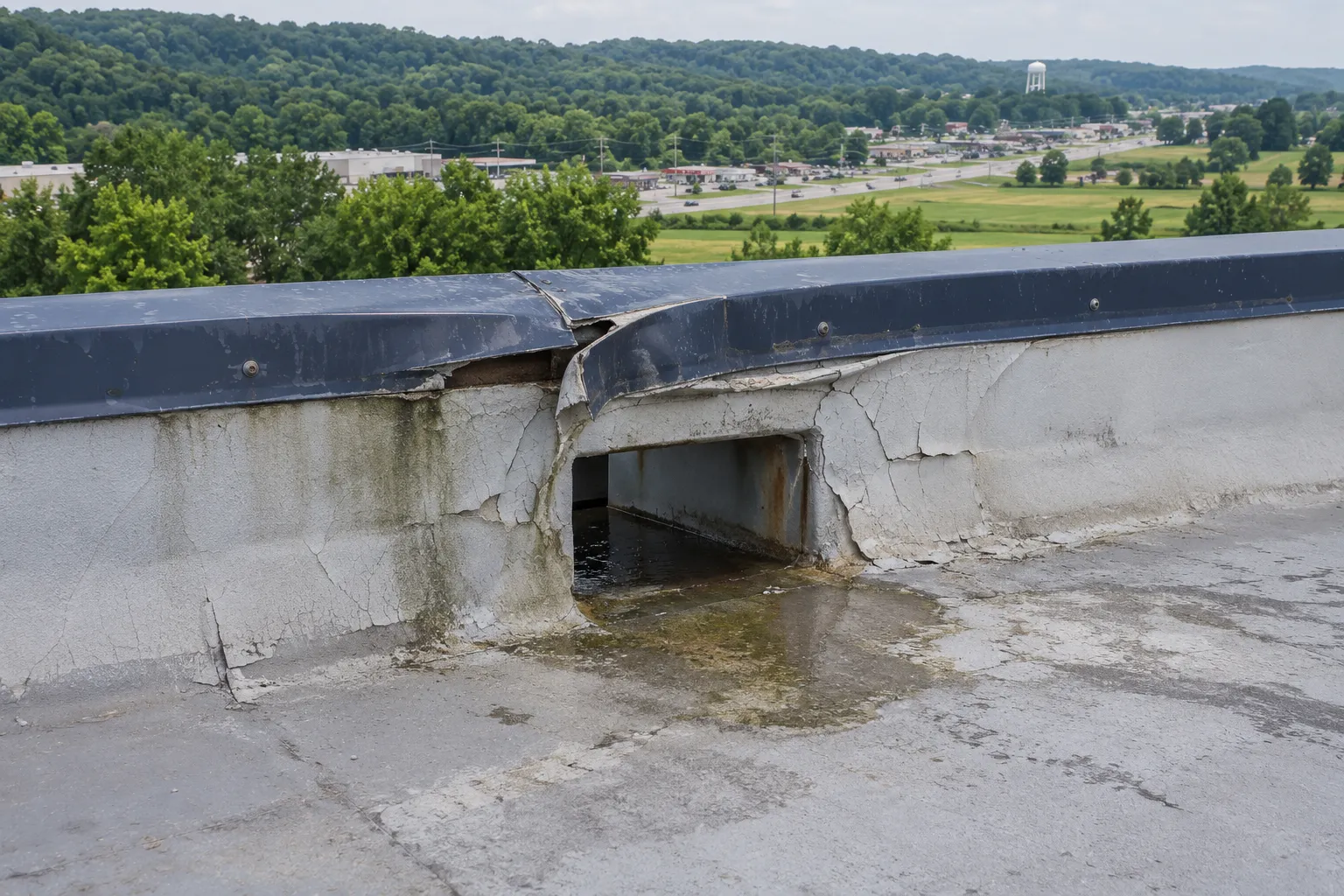
Low-slope additions and office sections on metal buildings carry TPO or EPDM, which get seam welding or taping instead of screws.
Flat roof repair →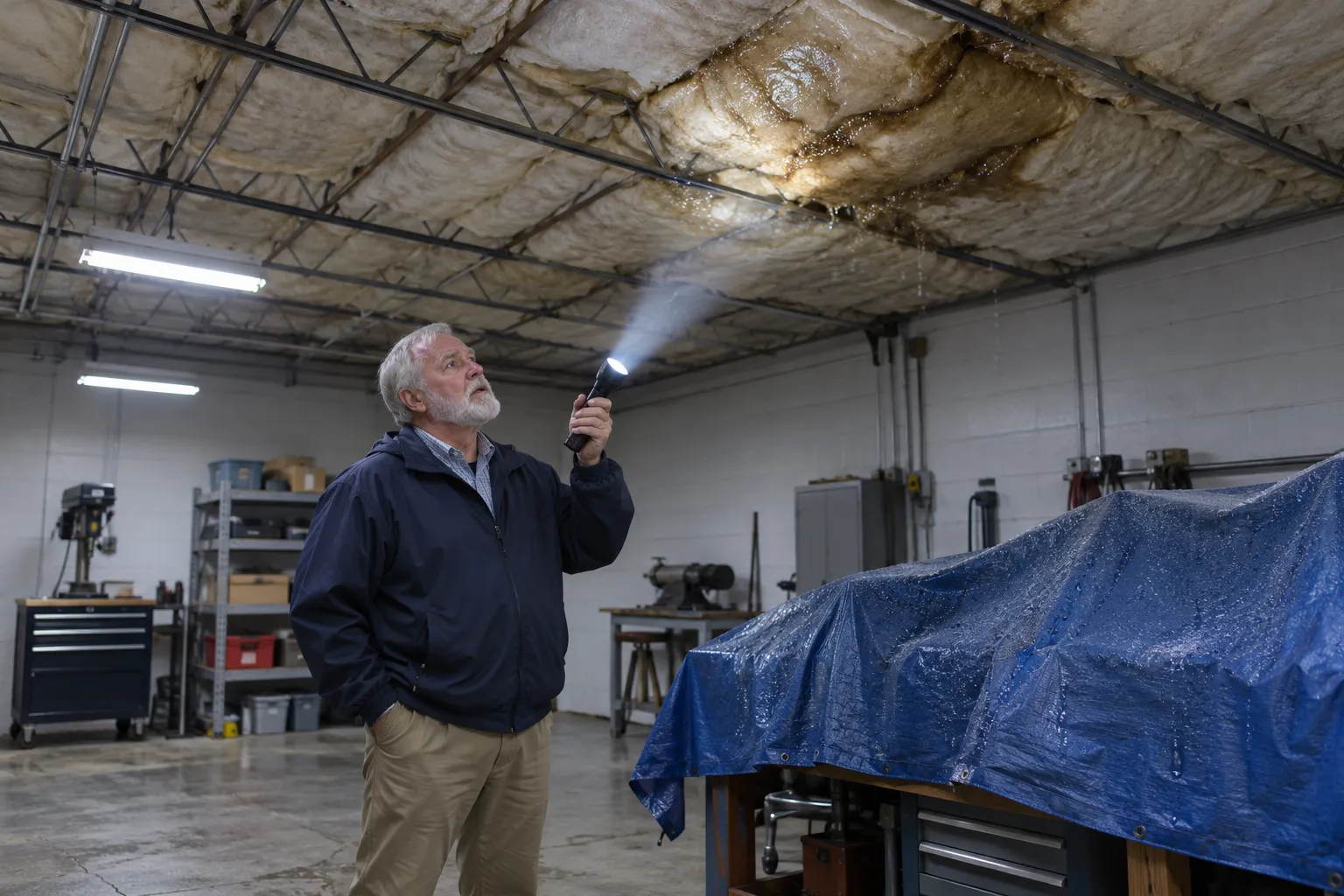
Stains that show up far from any visible screw or lap get traced along the purlins before a repair is chosen.
Commercial roof leak repair →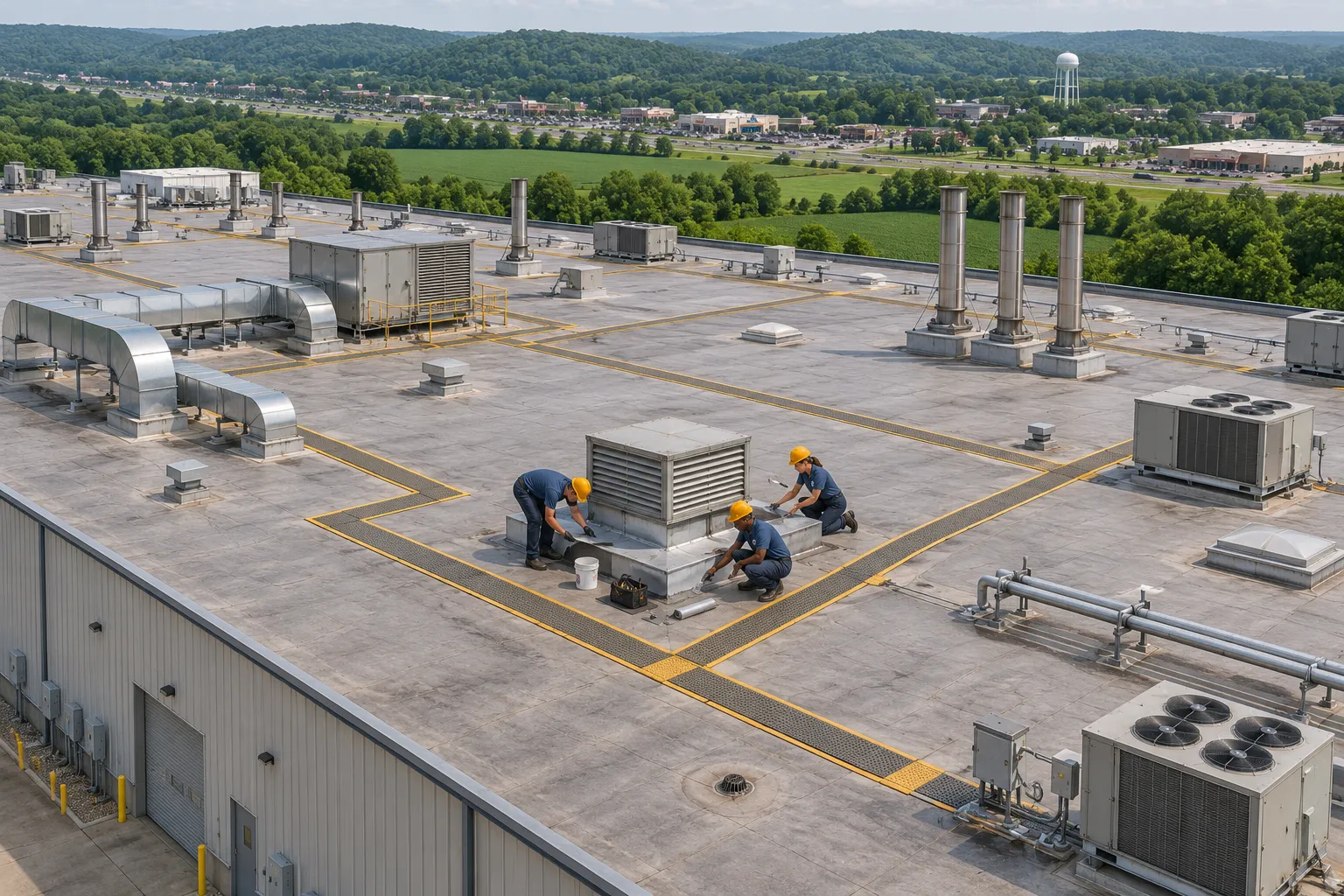
Large plant buildings with metal roofs and heavy exhaust fans need repairs planned around production.
Industrial roof repair →
Question about your own roof?
Call UsRubber washers dry out and crack, and daily panel movement slowly backs screws out of the purlin until the hole opens. The repair walks every screw row, marks loose, stripped, or tilted fasteners, and replaces them with oversized screws and new washers driven straight and snug.
Overtightening splits washers too, so a light hand on the driver matters.
Rain runs uphill under an end lap by capillary action and drips in at the purlin below. End laps get new butyl tape or sealant between the panels plus stitch screws through the lap, and side laps get stitch screws at the spacing the panel maker calls for.
Rusted lap edges are wire-brushed and primed before any sealant goes on.
Patch it when the rust-through is small and the steel around it is firm. Surface rust gets cleaned, primed, and sealed; pinholes get a fabric-reinforced patch; a hole bigger than a hand gets a screwed metal patch.
Replace the panel when holes spread along its run or the steel flakes under a scraper. Panel ends and end laps get probed, since rust there runs deep.
Open gutter seams are cleaned and resealed with loose rivets replaced, rusted gutter bottoms are patched or swapped, valleys are cleared and sealed at the panel overlap, and wind-lifted eave trim is refastened.
Overflowing gutters get larger or cleared downspout outlets. Box gutters built into the roof edge come first on older buildings, because a failed seam there leaks straight into the wall.
Ridge caps get new foam closures and stitch screws where wind-driven rain gets in. Curb flashing at rooftop units is resealed or rebuilt with a diverter on the high side. Cracked or yellowed skylight panels are replaced with panels matched to the rib profile, and split pipe boots get a new boot.
Cracked skylights are marked first, since they are a fall hazard.
Send the roof profile, where it drips, and how to reach the roof, or call to talk through the screw rows and laps giving you trouble.
Leave a name and number and we will call you back.
Prefer to talk now? Call (930) 201-5321