If Your Roof
Membrane Softening Around an Exhaust Fan
Grease or chemical discharge has swollen the sheet near the curb.
Start WithCut-Out and Resistant Patch

As a Radcliff industrial roof repair contractor, we repair plant and warehouse roofs around exhaust fans, heavy rooftop units, and large membrane fields, with work planned around production.
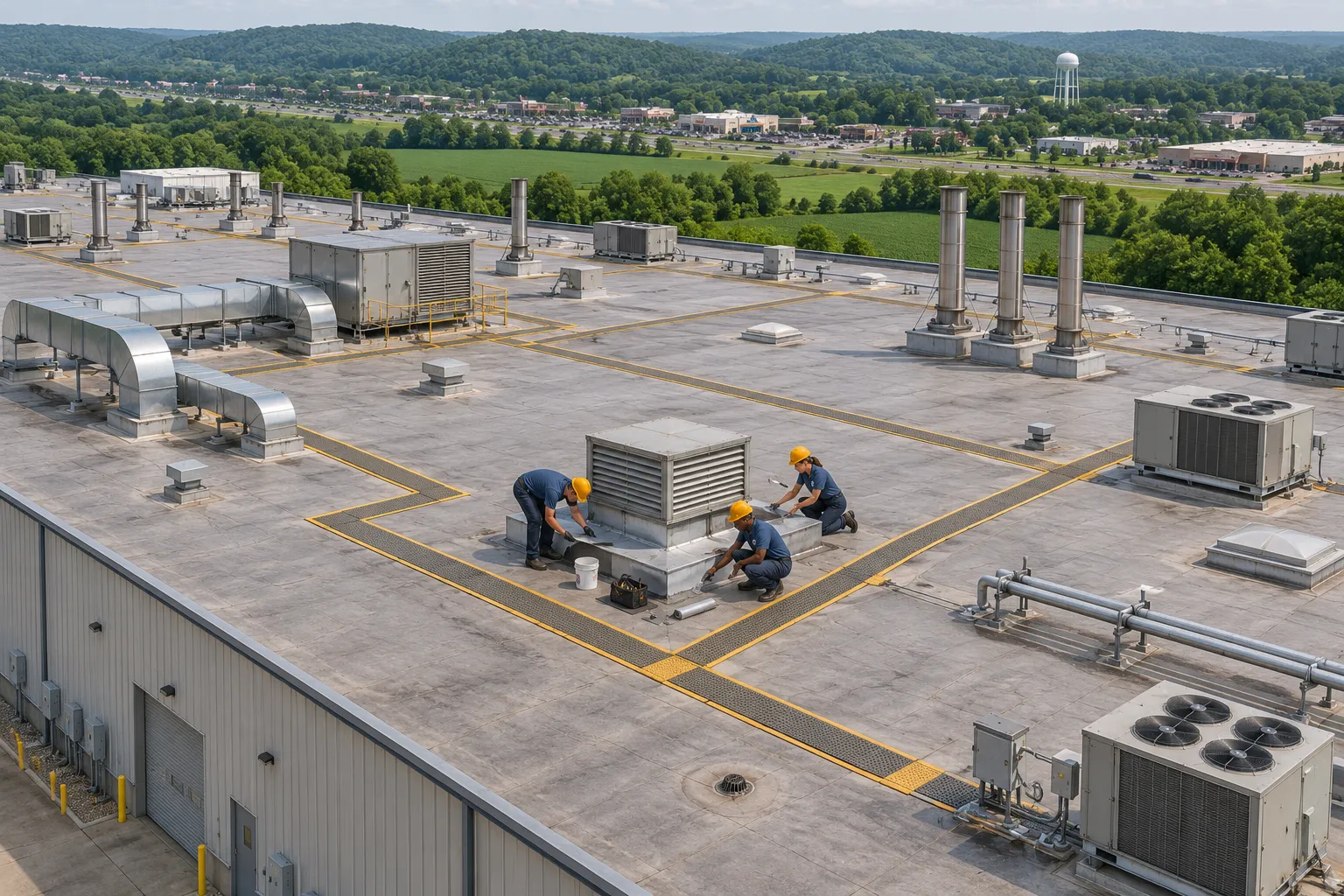
A Radcliff industrial roof repair contractor sorts the plant roof into one of these situations first, since large roofs hide how far a leak has spread.
Grease or chemical discharge has swollen the sheet near the curb.
Water is reaching equipment, electrical gear, or stored product under the roof.
Several drips in different bays suggest wet insulation spread between them.
Repair logs show one section needing patches over and over.
Plant roofs carry more equipment and more foot traffic than most, and these conditions drive most repair calls.
Exhaust residue attacks the sheet around the curb, and the damage keeps returning when the membrane is the wrong match for that discharge.
A drip over a line or a panel needs the area protected and the leak traced while the plant keeps running.
Constant service traffic to fans, RTUs, and make-up air units scuffs and punctures the membrane along the walk path.
Roof areas this large let water travel far across the insulation before anything drips inside.
Large units vibrate and shift, and their curb flashing opens at the corners first.
Damaged skylight panels leak and are a fall hazard for anyone servicing equipment nearby.
Industrial repairs pair a fix on the roof with a plan for what sits under it.
| Problem | Repair | Plant Coordination |
|---|---|---|
| Exhaust damage at fans | Cut out softened membrane, install a resistant patch or sacrificial layer, add a grease containment box | Fan shut down or covered during the work |
| Wet insulation over a large area | Moisture survey, cut out wet boards, tie in new membrane | Tarps under any opened deck |
| Leaks over production lines | Trace and repair from above, with interior access only to confirm drip points | Sensitive zones marked by plant contacts |
| Worn service routes | Patch punctures and add walkway pads along the service path | Walk path kept away from loading areas |
| Work near air intakes | Schedule adhesive and welding work off-shift where the plant allows | Intakes shut or covered |
Targeted repairs on a plant roof stop the leak at its source and keep production running under the work.
Residue around a fan softens the sheet and the old patch fails again.
A resistant patch or sacrificial layer, plus a containment box at the fan, keeps the discharge off the new membrane.
Leaks spread far across the field before showing inside.
A moisture survey maps the damp areas so only the wet boards are replaced and the dry roof keeps working.
Noise, odor, or dust near intakes pushes work into the wrong hours.
Off-shift scheduling, covered intakes, and daily work areas closed up watertight keep the repair out of the production schedule.
Problems keep returning in the same zones without anyone noticing the pattern.
A roof map and dated repair log show which sections need repair and which are ready for a bigger decision.
Call us with the bay and what sits below it. Shut off power to wet electrical gear before anyone works near it.
Call UsSend the roof size, the problem zones, and the plant safety contact so the inspection covers access rules.
Get A Free EstimatePlant roof repairs add coordination steps to the usual order of work.
We walk the roof with the plant contact, mark drip points inside, and note fans, stacks, units, and skylights near each problem area.
Clean rooms under the roof, electrical rooms, and production lines under the work get marked, and air intakes near adhesive or welding work are shut or covered.
An infrared scan on a clear evening or a capacitance meter grid maps wet insulation, and core cuts confirm the readings at key spots.
Wet boards come out, resistant membrane goes in around exhaust, and any opened deck has tarps underneath. Work areas are closed up watertight at the end of each day.
Each repair goes into the roof map and log with its date, location, and materials, so repeat problems in one zone show up early.
Plants often combine metal buildings, membrane roofs, and long leak paths on one property.
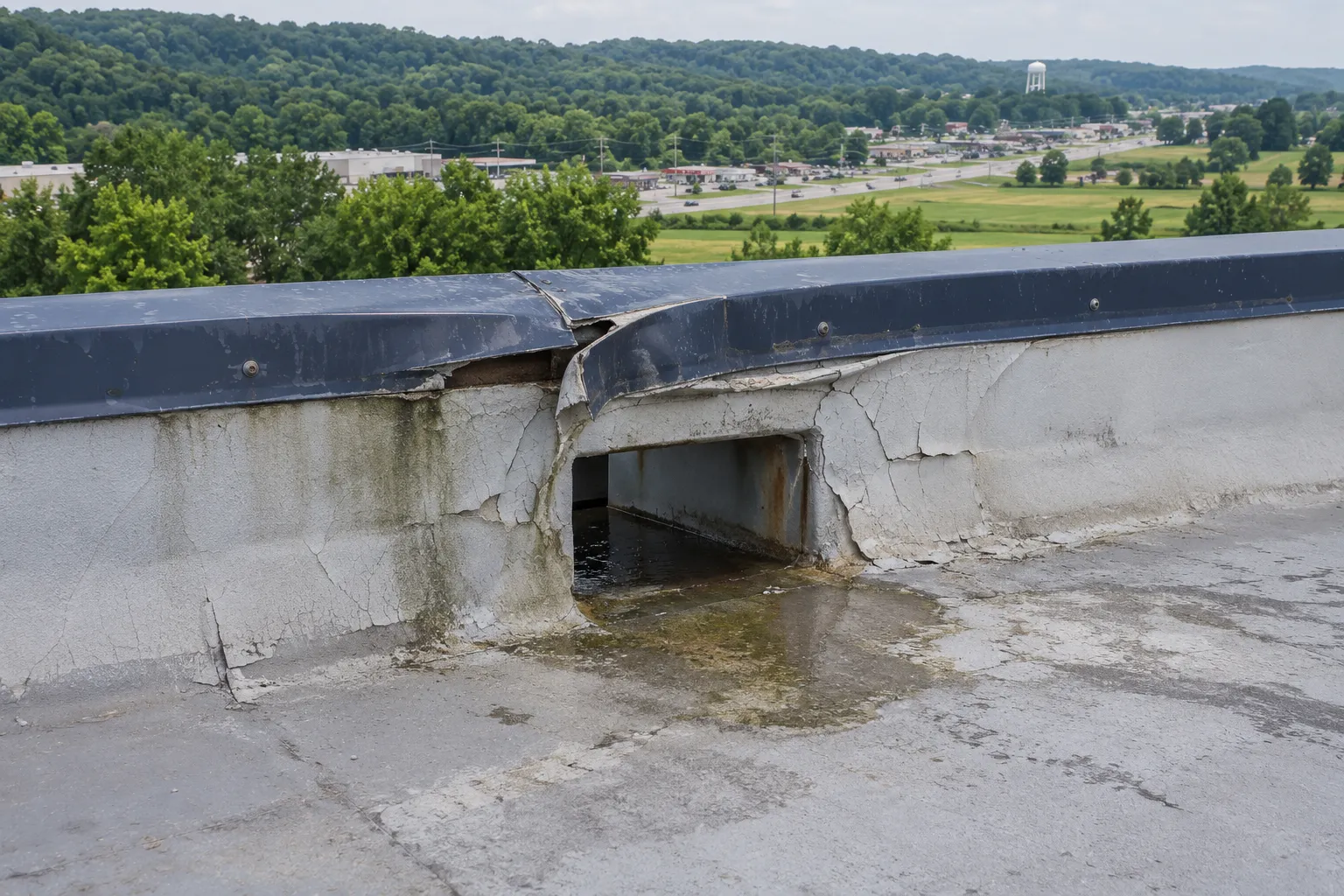
Office wings and low-slope sections of a plant carry TPO, EPDM, or built-up roofs with their own seam repairs.
Flat roof repair →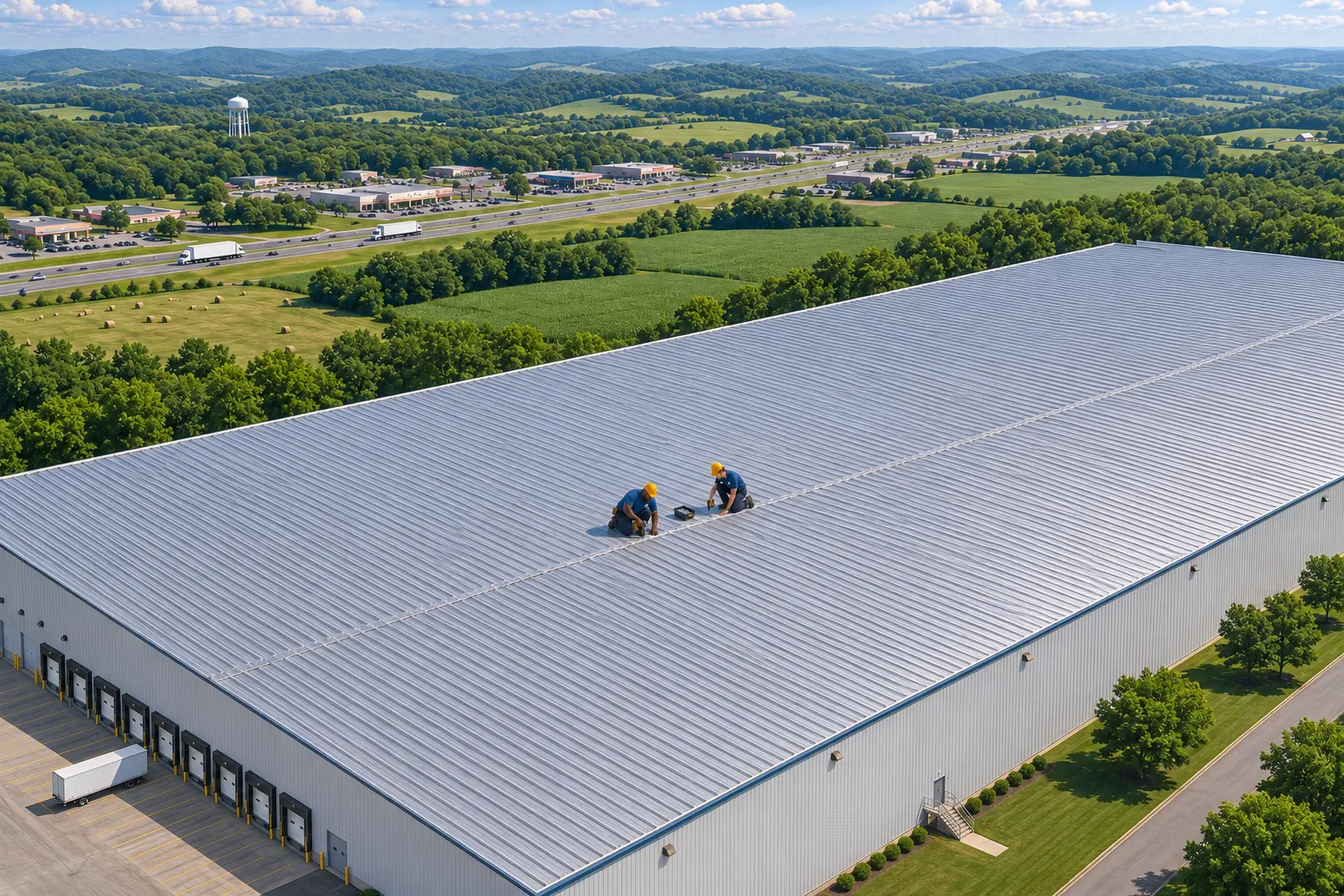
Warehouse and storage buildings with exposed-fastener panels need screw and lap work instead of membrane patches.
Commercial metal roof repair →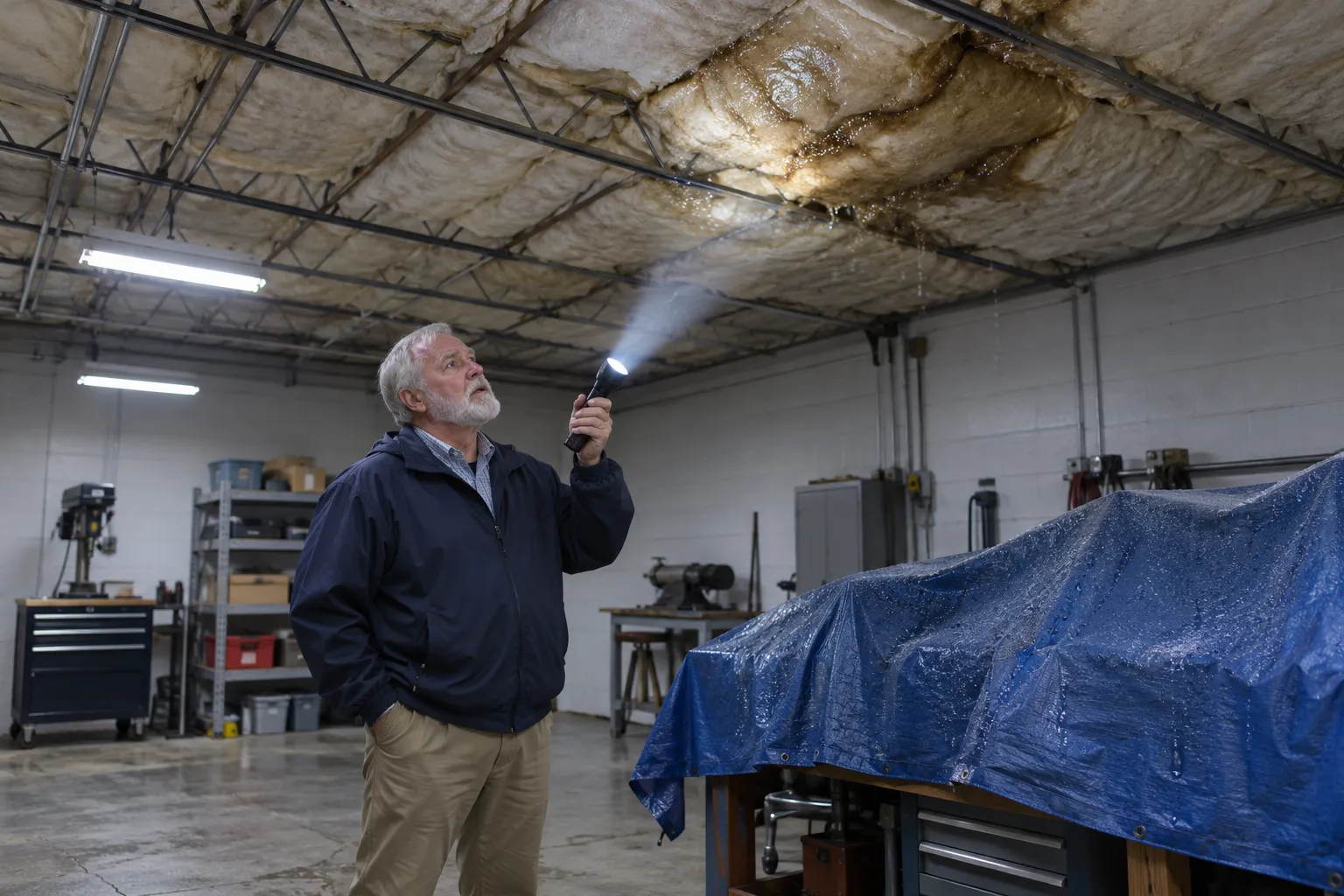
Hard-to-find leaks over equipment get traced along purlins and flutes before any patch goes on.
Commercial roof leak repair →
Question about your own roof?
Call UsPlant roofs are bigger, carry heavier equipment and process exhaust, and have production running under the work.
A single leak can reach a production line, electrical gear, or stored product. Repairs plan for leaks spreading far before they show, exhaust attacking the membrane, constant service traffic, and plant rules for hot work, lockout, and fall protection, all coordinated through the plant safety contact.
First, find out what each fan or stack discharges onto the roof. The softened or swollen membrane is then cut out down to firm substrate and replaced with a patch or sacrificial layer that resists that discharge, a containment box goes on kitchen and process fans, and the area around them is cleaned.
Damage that returns after a repair points to a membrane mismatch across that zone.
Noisy or odorous work is scheduled off-shift, plant contacts mark clean rooms and electrical rooms, and intakes near adhesive or welding work are shut or covered. Tarps go under any opened deck, material lifts happen during breaks or in blocked-off yard areas, and every work area is closed up watertight before crews leave each evening.
Most plant leak repairs happen entirely from above.
With a moisture survey that maps damp areas across the roof. An infrared scan after sunset shows wet insulation holding heat on large roofs with clear evenings. A capacitance meter reads moisture under the membrane in a grid at any time of day.
Core cuts confirm the readings at key spots, and only the wet areas are cut out and replaced.
A roof map marking drains, units, stacks, skylights, and walkway pads; inspections twice a year and after major storms; a repair log with dates, locations, and materials; and a priority list that ranks leaks over production lines and electrical rooms first.
When the same zones keep needing repairs, those sections become candidates for restoration or replacement.
Send the roof size, the problem zones, and the plant safety contact, or call to talk through access and shift timing.
Leave a name and number and we will call you back.
Prefer to talk now? Call (930) 201-5321